When designing circuits for RF, microwave, or high-speed applications, selecting the right PCB material is essential. Rogers PCBs stand out in this field due to their superior electrical performance, excellent thermal stability, and precise impedance control. Because of these advantages, engineers often prefer Rogers PCBs for applications where consistent, reliable performance at high frequencies is a critical requirement.
What is a Rogers PCB?
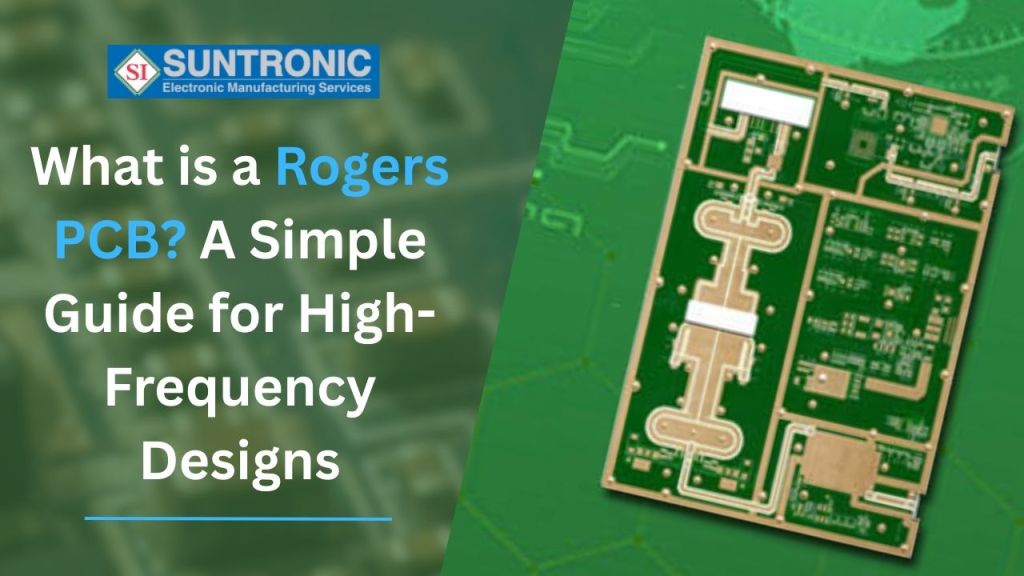
A Rogers PCB is a type of printed circuit board designed for high-frequency applications such as RF, microwave and high-speed digital circuits. Unlike standard FR4 boards, which are widely used in consumer electronics, Rogers PCBs use specialized Rogers PCB materials engineered to provide low signal loss, controlled dielectric constants and excellent thermal stability.
Key points about Rogers PCB material:
- It is primarily designed for high-frequency PCB materials, including microwave and RF designs.
- The material offers precise impedance control, making it ideal for circuits that operate at gigahertz frequencies.
- Common Rogers materials include RO4000, RO3000, RT/duroid, DiClad, CuClad, IsoClad, IM and TTM series.
In comparison, FR4 boards are suitable for standard digital circuits but fall short in high-frequency performance. Choosing between FR4 vs Rogers PCB depends on the specific requirements of signal integrity, thermal stability and application environment.
Key Advantages of Rogers PCBs
Engineers choose Rogers PCB material over standard FR4 for several compelling reasons. Here are the primary advantages:
- Low and Controlled Dielectric Constant (Dk): Rogers PCB materials offer a stable dielectric constant across a wide frequency range, reducing signal loss and reflections.
- Minimal Signal Loss: High-frequency signals maintain their integrity due to low dissipation factor (Df), essential for RF and microwave circuits.
- Excellent Thermal Stability: Rogers PCBs can handle high operating temperatures without warping or losing electrical performance.
- Low Outgassing: Ideal for aerospace, medical and other critical industrial electronics applications.
- Precise Impedance Control: Rogers PCB materials allow engineers to design controlled impedance traces, critical for high-speed data and RF signals.
- High Reliability: These boards withstand harsh environments, making them suitable for military, satellite and communication systems.
Rogers PCB vs FR4: Which Material Is Right for Your Design?
When designing PCBs, engineers often compare Rogers PCB vs FR4 to determine the best material for their project. Key factors include:
- Signal Loss:
- Rogers PCB material: Minimal loss at high frequencies
- FR4: Significant signal loss at RF/microwave frequencies
- Thermal Performance:
- Rogers PCB: High thermal stability and minimal expansion
- FR4: Moderate thermal stability, prone to warping in extreme temperatures
- Cost:
- Rogers PCB: More expensive due to specialized materials
- FR4: Economical for low-frequency or standard circuits
- Real-World Applications:
- Rogers PCB: Aerospace, telecom, medical devices, consumer electronics PCB assembly, high-speed industrial electronics
- FR4: Standard PCBs for consumer products, basic electronics and prototyping
Additionally, some engineers also compare FR4 vs. Polyimide PCBs for high-temperature applications. While polyimide boards offer good thermal performance, Rogers PCBs provide superior electrical performance for high-frequency designs.
Common Rogers PCB Material Explained
Rogers Corporation offers a wide variety of high-frequency PCB materials, each designed for specific performance and thermal requirements:
- RO4000 Series (e.g., RO4003C): High-frequency material with low signal loss, ideal for RF circuits.
- RO3000 Series: Cost-effective solution for medium-frequency designs.
- Rogers RT/duroid: Ultra-low loss material for microwave and satellite applications.
- DiClad, CuClad, IsoClad: Laminates for specialized applications requiring excellent thermal and electrical stability.
- Rogers IM and Rogers TMM Series: Advanced materials optimized for industrial electronics and consumer electronics PCB assembly.
When selecting Rogers PCB material, consider the frequency range, thermal requirements and budget. RO4003C is among the most popular materials due to its excellent balance of performance and cost.
Rogers PCB Fabrication Challenges
Fabricating Rogers PCBs requires specialized skills due to the unique material properties. Key considerations include:
- Drilling: Harder than FR4, requiring precise tools to prevent delamination or rough edges.
- Lamination: Requires controlled temperature and pressure to ensure material integrity.
- Impedance Control: Critical for RF and microwave circuits; even slight variations in trace width can impact performance.
- Handling Requirements: Sensitive to moisture and mechanical stress; proper storage and handling are essential.
These challenges highlight why working with experienced Rogers PCB manufacturers is vital for high-frequency PCB projects.
How to Choose the Right Rogers PCB Manufacturers for Your Project
Choosing the right Rogers PCB manufacturers is critical to achieving reliable performance in high-frequency and RF designs. A qualified manufacturer should have proven experience working with high-frequency PCB materials and a strong understanding of RF and microwave applications, as these require precise impedance control and tight tolerances. Equally important is a robust quality control system. Manufacturers should follow recognized ISO standards and offer comprehensive testing, including electrical, thermal and impedance verification, to ensure consistent performance.
Strong capabilities in Rogers PCB fabrication, such as advanced drilling, lamination and plating processes, are essential for handling complex board structures without compromising signal integrity. The ability to support prototyping and small-batch production is also valuable, especially for testing designs used in industrial electronics and consumer electronics PCB assembly.